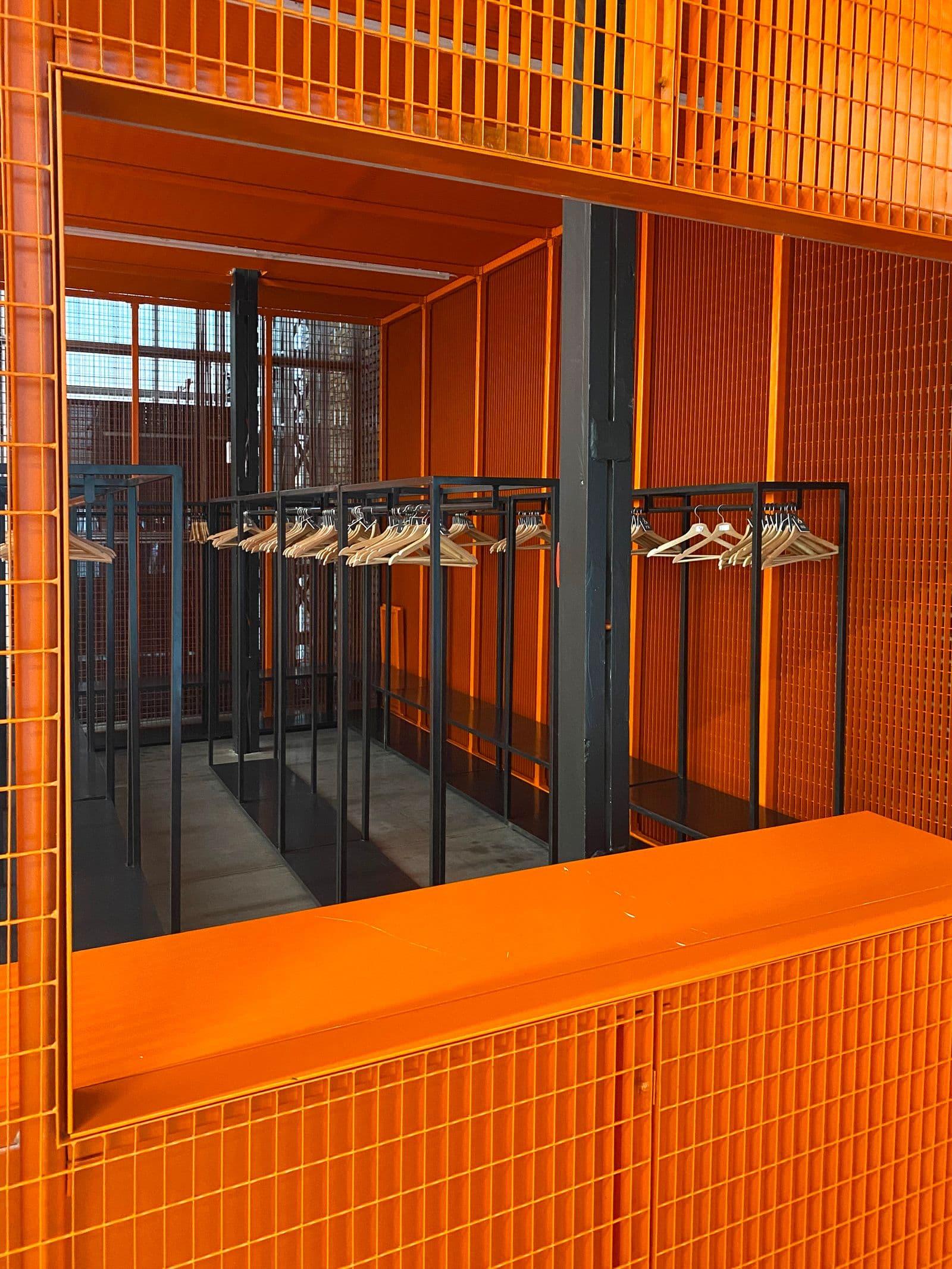
Capacity, equipment, staffing, pricing and liability: everything you need to run a smooth coat check at your club or event.
The coat check is a strange position: everyone treats it as secondary, until the 5am queue spills into the room, a guest claims a coat that cannot be found, or the cash drawer no longer matches the number of hangers out. Run well, it smooths the entrance, protects your guests' belongings and generates real revenue. Run poorly, it is the first and last impression of the night, both ruined.
This guide covers what you need to run a coat check at a nightclub, concert venue or private event: sizing, equipment, staffing, the ticket system, pricing and liability. Whether you are starting from scratch or professionalising an existing setup, it is all here.
Sizing: how many hangers, racks and square metres?
Everything starts from two numbers: expected attendance and the season. In winter, nearly every guest arrives with a coat; in summer, deposits shift to bags, motorcycle helmets and light jackets. The same 400-capacity club does not need the same coat check in January and July.
- •Plan around 35 hangers per rack. Beyond that, numbers get hard to read and garments crush each other: event professionals cap at 40-50, but 35 is the sweet spot for working fast.
- •Set aside floor space or lockers for bags, helmets and umbrellas: they clutter a coats-only setup faster than anything else.
- •Check the weather for the night: rain or a cold snap significantly increases deposits. An empty rack is better than ten coats on the floor.
- •Keep a metre of circulation space behind the racks: staff must reach any number without moving three rows.
Concrete example: for a 400-person winter night, expect 300 to 350 deposits, meaning around ten racks and at least as many linear metres, plus the bag area. If your space cannot handle it, better to know now than at 11:30pm.
Equipment: the full checklist
- •Stable racks, ideally on locking wheels: budget folding models struggle under 35 winter coats.
- •Numbered hangers, or standard hangers with firmly attached tags. Numbers must be readable at a glance, in low light.
- •Coupon tickets: books of 50 tear-off tickets or numbered rolls. The classic format has 2 to 3 coupons per number (hanger, guest, accessory).
- •A counter or stable table, with a clear separation between the guest side and the rack side.
- •Tape, markers, safety pins: to reattach a coupon, flag a special case, fix a torn ticket.
- •Proper lighting on the staff side: half of all restitution errors come from a misread number in the dark.
- •A dedicated cash drawer or card terminal: coat check revenue must be kept separate from the bar.
Paper supplies are cheap per unit: roughly 25 euros for 5,000 roll tickets, a bit more for stub books or custom printing. The real cost is elsewhere: it is a purchase that repeats every season, and every ticket a guest loses costs you search time and a potential dispute. For one-off events, rental is also an option: several suppliers rent rack, hanger and ticket bundles by the night.
Staffing: how many people, and how to organise the flow
A coat check attendant typically earns around minimum wage plus a little. Sizing depends less on total attendance than on how concentrated the peaks are: everyone arrives within 60 to 90 minutes, and everyone leaves within 30. One person is often enough at cruising speed; at opening and closing peaks, double or triple the position.
- •Physically separate the drop-off queue from the pickup queue whenever possible: mixing them is the number one cause of closing-time chaos.
- •Train everyone on the same ritual: number called out loud, one coupon stapled, one coupon handed over. Consistency prevents errors, not speed.
- •Keep a float of coins if the coat check takes cash: making change on large notes in a rush slows everything down.
- •Brief the edge cases before doors: lost ticket, guest who left without collecting, item found in a pocket.
The ticket system, step by step
The classic system relies on matching coupons bearing the same number:
- 1.The first coupon is attached to the hanger (stapled or slotted into a numbered hanger).
- 2.The second coupon goes to the guest: it is their proof of deposit, to present at pickup.
- 3.The third coupon, where it exists, is attached to the same guest's accessories (bag, helmet, umbrella) stored under the matching hanger.
- 4.At pickup, the guest hands over the coupon, staff find the hanger with the same number, check the match and return everything.
The weak point is well known: the lost ticket. Define the procedure before it happens: ask for ID, have the guest describe the garment and its contents precisely, hold the item until the end of service and return it from what remains, and log the incident (name, hanger number, time). Handing items over on a quick description is an open door to opportunistic theft.
What to charge, and the rules to respect
Coat check prices are generally free to set. In France the market sits between 2 and 4 euros per item, a little more in upscale Paris venues; some places include it in the entry price as a commercial choice. Two rules are worth knowing if you operate in France: prices must be displayed both outside the venue and at the coat check itself, and making a paid coat check mandatory is prohibited (it counts as a tied sale). If you operate elsewhere, check your local consumer rules; the display logic is a good practice everywhere.
Your liability when a garment disappears
This is the topic almost nobody masters, and the one that costs the most. In France, a paid coat check creates a deposit contract with each guest (articles 1927 and 1928 of the Civil Code): you must care for their belongings as you would your own, and return them in their original state (article 1944). If an item is lost or stolen, the venue's liability is presumed: it is up to you to prove you were not at fault, not the other way around. Compensation is generally based on the purchase value less depreciation, and can include a bag's contents.
As for the classic sign saying the venue accepts no responsibility: its legal weight is very limited for a paid, supervised coat check. You cannot charge for safekeeping and disclaim it at the same time. Outside France the doctrines differ, but the pattern is similar in most countries: a paid deposit creates real obligations.
The 5 expensive mistakes
- 1.Understaffing the opening: one person at peak arrival time and the queue backs up to the door. The first impression of the night is a wait.
- 2.Mixing drop-off and pickup in one queue: at closing, guests rushing to leave block those still arriving.
- 3.Sloppy numbering: tickets reused from a previous night, duplicates across two open books, unreadable numbers. Every ambiguity is a dispute waiting to happen.
- 4.Ignoring unclaimed items: without a procedure (inventory, dated storage, contact attempt), orphan coats pile up and end in conflict.
- 5.Not tracking revenue: without a dedicated drawer and a count matched against deposits, you cannot know what the coat check actually earns.
What about a coat check without paper tickets?
Everything above describes a well-run traditional coat check. Part of those constraints simply disappear with a different tool: with a digital cloakroom for nightclubs, guests scan a QR code on arrival and receive their ticket on their phone. At pickup they show the number on their screen and staff grab the matching hanger: as fast as paper, with nothing to print or lose.
The lost ticket disappears as a problem: staff can find any deposit by name or phone number. Payment is contactless at drop-off, revenue is tracked automatically, and unclaimed items get a one-click SMS reminder. The same system covers festival bag check for bags and helmets. To dig into the transition, we detailed the switch in a dedicated guide.
Ready to digitalize your cloakroom?
Get started for free, no credit card required. Up and running in under an hour.
Book a meetingConclusion
A good coat check rests on simple rules: size from attendance and season, cap your racks, separate the flows, ritualise the ticket system, display your prices, and know your obligations as a depositary. These are habits more than investments, and they transform the shape of a closing time.
The last step is tooling: paper does the job up to a certain volume, digital removes the disputes, the queues and the opacity of the revenue. What matters is choosing deliberately, with the coat check treated as a real operational position rather than an entrance chore.